Cultural Cuisine: Apfelstrudel
Austrian desserts and patisserie are a world of flaky, sweet, delectable treats not to be underestimated. Whether enjoyed in a Viennese bakery or huddled around the wooden table of a traditional Alpine home, the century old dishes passed down through generations remain a powerful symbol of the country’s food culture.
There’s a universal comfort in the aroma of baked apples and warming spices, especially during the winter months. Yet some dishes do more than simply taste good, they carry history, shaped by tradition, travel and technique. This is the story I wanted to honour when photographing the classic apple strudel.
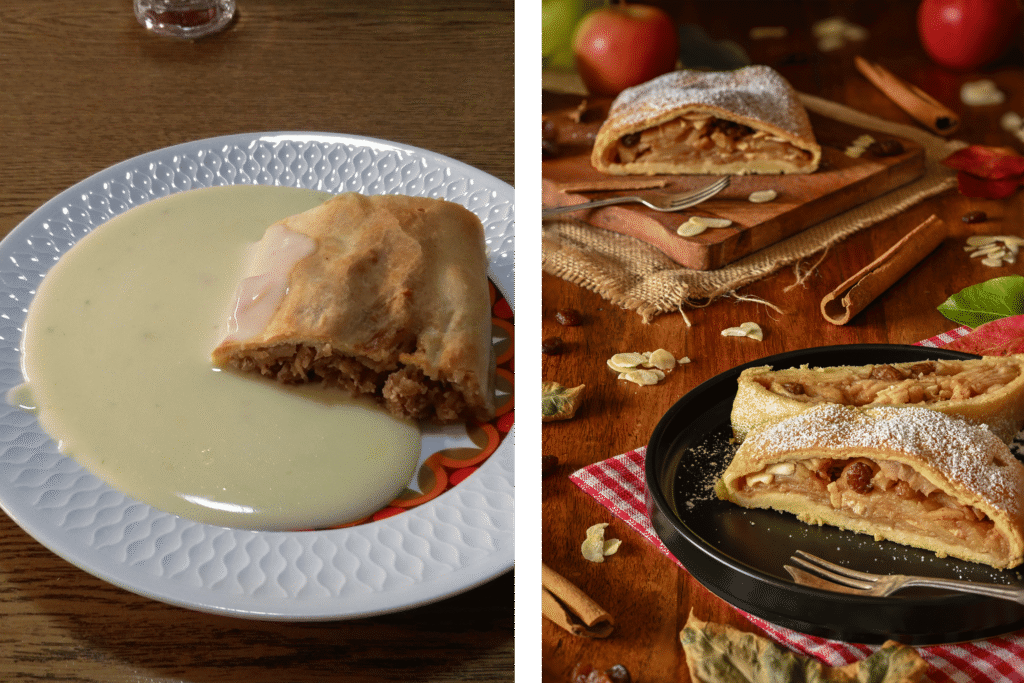
Let me take you on a journey with this iconic Austrian pastry and show you how a dull, uninspiring image can be transformed into mouth-watering, authentic, premium photography that conveys as much about heritage as it does about flavour.
The History
Apple strudel dates back to the late 17th Century, with a recipe that has truly stood the test of time. Known locally as Apfelstrudel, it’s paper thin layers of dough are believed to have been inspired by Middle Eastern pastries such as baklava, introduced into Central Europe through historical trade routes. Over time this technique was adapted using local ingredients, resulting in the well know apple filled strudel we recognise today.
The apple strudel photographed here was made using a quicker, more accessible variation of the classic pulled dough, while still celebrating the fruits, flavours and spices that define a classic Apfelstrudel.
Props & Styling
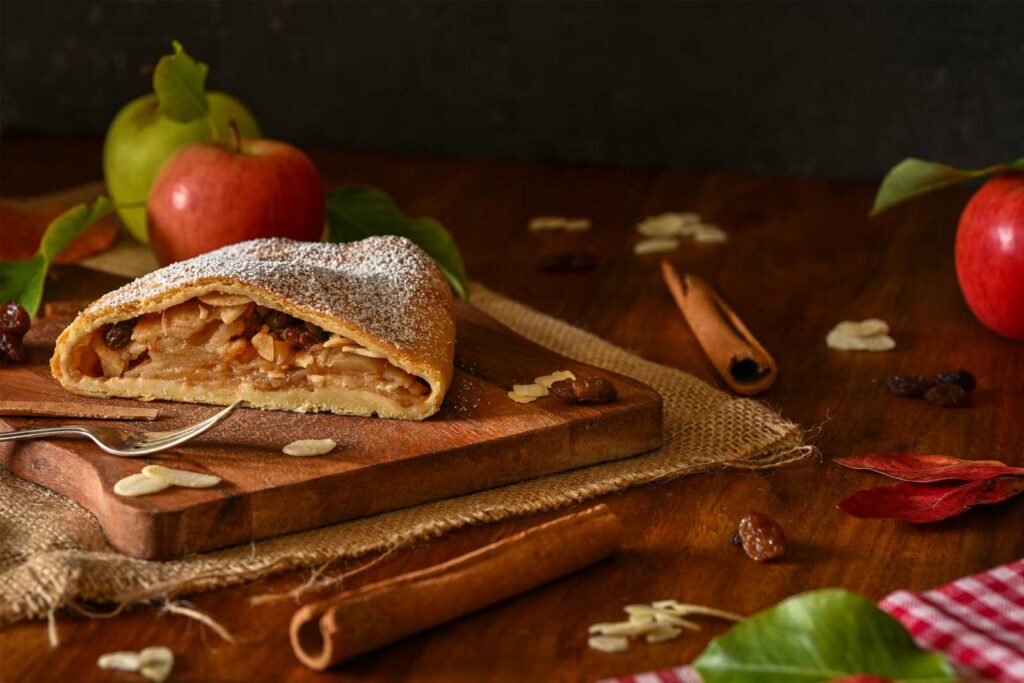
Apfelstrudel lends itself beautifully to visual storytelling. It’s a dish rooted in warmth, tradition and craftsmanship, which has been reflected through the choice of props.
Think rustic wooden boards, hessian textures and the traditional red and white checked cloth stamped with a stag; synonymous with Austria, help set the scene. Scattered ingredients, from freshly plucked apples to the sultanas, flaked almonds and cinnamon that all play their part in telling the story behind the strudel.
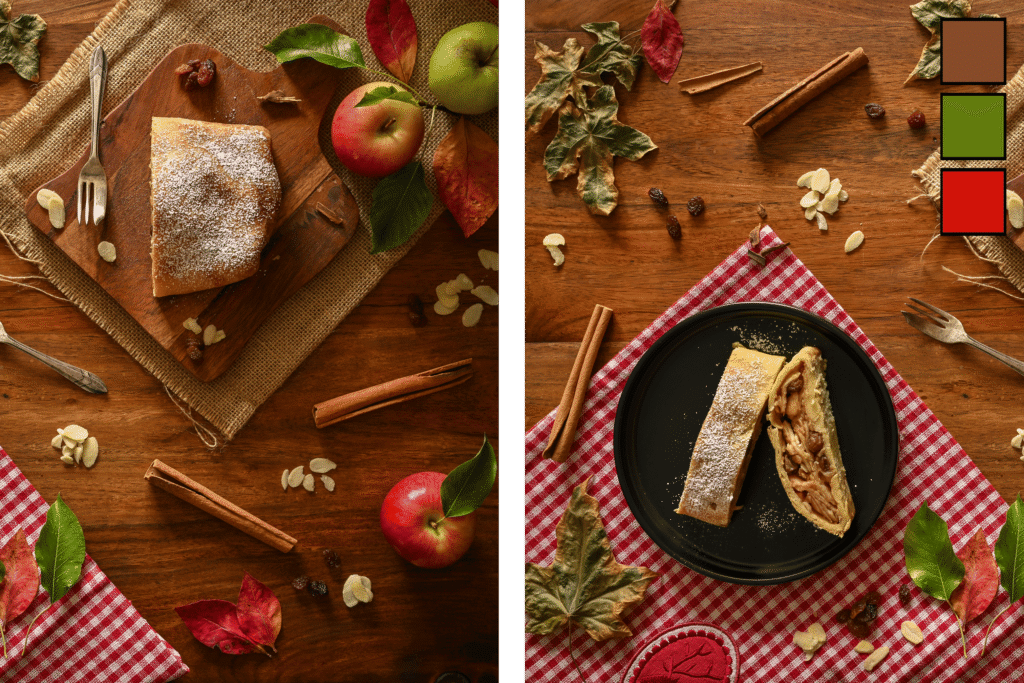
As well as leaving part of the strudel untouched, slices were carefully placed at different angles, allowing full appreciation of the delicate layers within. Vintage forks subtly guide the eye towards the plated dish, where a light dusting of icing sugar stands out against the simplicity of a plain black plate.

Colours
Working with the beige and brown tones of the apple strudel and its filling, I created soft monochromatic palette that flows from the table, through to the hessian cloth and wooden board. A secondary layer of reds and greens was introduced through the apples, checked cloth and foliage, adding subtle pops of colour while helping to tie the two palettes together.
Gentle contrasts from the flaked almonds and a light dusting of icing sugar create points of visual interest, allowing the strudel to stand out without overpowering its natural, earthy tones.
And as with all food photography, when the story is understood, the visuals become far more powerful. Having seen how I designed and planned this delicious Apfelstrudel shoot, I hope you’re feeling inspired to create a culturally authentic scene for your food.
If there’s a cultural dish you’d love to see featured next, please let me know.

About the Author
Ansuya is a food photographer specialising in Indian and global cuisine.